
- May 14, 2026
- 5:45 pm
Top 10 Healthy Food Options in Indore You Should Try
Subscribe to newsletter
Subscribe to receive the latest blog posts to your inbox every week.
By subscribing you agree to with our privacy policy.
Let’s be honest — when someone says “Indore food,” the first images that rush in are Sarafa Bazaar at midnight, steaming jalebis, crispy garadu, and the eternal question: do I eat one more plate or two?
Indore is rightfully celebrated as one of India’s greatest street food cities. National Geographic called it India’s “most under-the-radar street food city.”
And yet, hidden within this glorious food culture is something that doesn’t get talked about enough: Indore has some genuinely remarkable healthy food options , not despite its food traditions, but because of them.
This city’s cuisine has always been rooted in fresh ingredients, spices with medicinal properties, and seasonal cooking wisdom passed down through generations.
You just have to know where to look.
In this article, we’re going to spotlight 10 healthy food options available in Indore — from beloved street classics to modern nutrition-forward choices — and explain why each one deserves a place in your weekly diet.
Whether you’re a lifelong Indori or a newcomer to the city, this list will change how you see your plate.
1.Microgreens — Indore's Newest and Most Nutritious Healthy Food Option
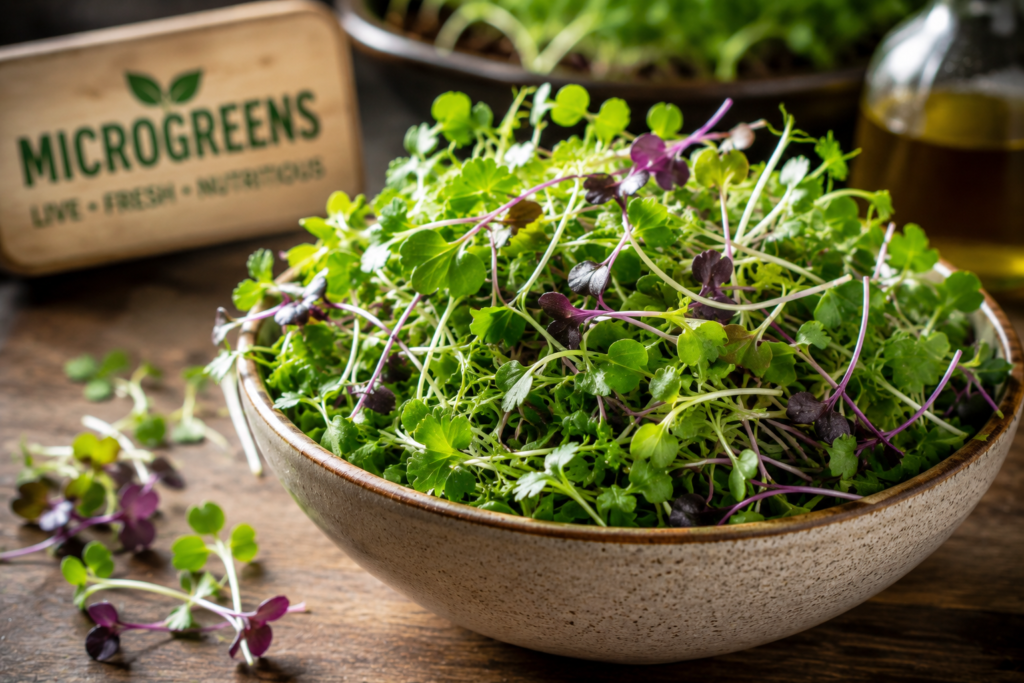
We saved the best for last. Or rather, the smallest — and the most nutritionally concentrated.
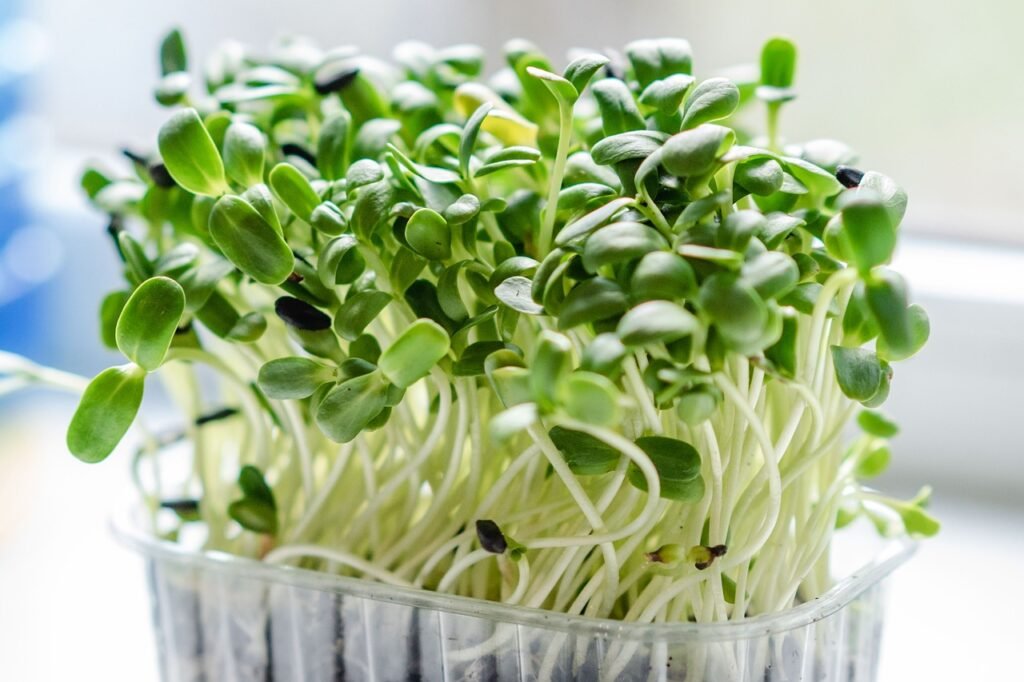
If you haven’t heard of microgreens yet, you will. These are the young seedlings of vegetables and herbs — broccoli, radish, fenugreek, sunflower, peas — harvested just 7 to 14 days after germination, at the exact moment they contain their highest density of vitamins, antioxidants, and minerals.
Research published in the Journal of Agricultural and Food Chemistry found that microgreens contain 4 to 40 times more nutrients per gram than their mature vegetable counterparts.
Red cabbage microgreens have 40x more vitamin E than full-grown cabbage. Radish microgreens have nearly 7x more vitamin C than raw radish.
Just 20 grams a day — a small handful added to your dal, paratha, smoothie, or salad — can deliver a concentrated dose of nutrients that would otherwise require far larger quantities of vegetables to match.
It’s not a replacement for vegetables; it’s a powerful, practical daily supplement from real food.
India’s eating trends in 2025 reflect a broader philosophy of “calorie restriction without malnutrition” — where fresh, nutrient-dense foods are taking centre stage over processed options. Microgreens sit perfectly at the centre of this movement.
At HavitGreens, we grow fresh microgreens right here in Indore — varieties like broccoli, radish, fenugreek, sunflower, and peas — using clean growing practices, no pesticides, and harvested fresh to order.
Indore already has its healthy food traditions. Microgreens are simply the next chapter.
Health Edge: Pound for pound, the most nutrient-dense food on this list. Rich in vitamins C, E, K, beta-carotene, and antioxidants. Fenugreek microgreens specifically support iron absorption — highly relevant for Indore’s health-conscious community.
Where to Get It: Visit havitgreens.com to order fresh microgreens delivered in Indore. Make a Healthy Habit — with HavitGreens.
2. Indori Poha — The City's Original Superfood Breakfast
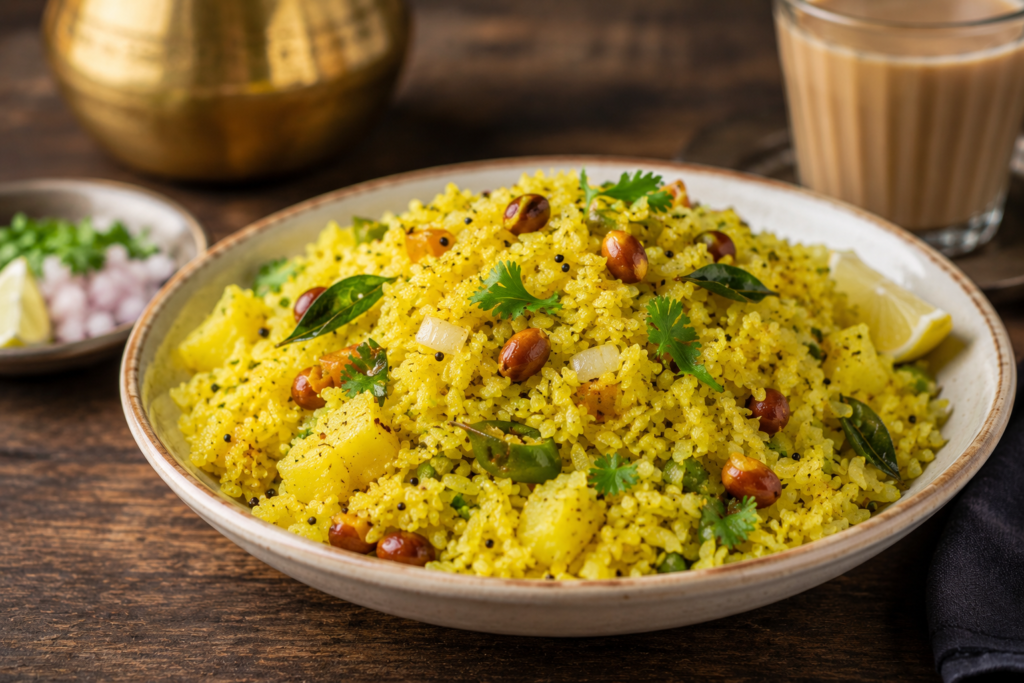
Ask any nutritionist what the ideal Indian breakfast looks like, and their answer will sound suspiciously like Poha.
Indore’s version of Poha is a cut above the rest — softly steamed and garnished with jeeravan masala, a tangy local spice mix including dried mango powder and roasted cumin, crunchy gram-flour sev noodles and fresh coriander — and it happens to be one of the healthiest starts to your morning.
Poha is known for being light, easy to digest, and quick to prepare, which makes it a regular choice for breakfast or a light meal. Many people enjoy it because it feels filling without being heavy.
A typical serving delivers carbohydrates for sustained morning energy, along with iron, magnesium, and B-vitamins.
Poha contains 87% carbohydrates, 9% protein, and 4% fat, and 100 grams of poha provides approximately 354 kcal. When you add vegetables like peas, carrots, and onions — which most Indori vendors do — you’re getting fiber and vitamins on top of that.
Health Edge: Rich in iron (helpful for anaemia prevention), gluten-free, easy on the digestive system, and light enough to eat without mid-morning sluggishness.
Where in Indore: Prashant Nashta Corner near Residency Area has been serving authentic Indori Poha since 1949. Nearly every mohalla has its trusted morning poha stall.
HavitGreens Tip: Add a small handful of microgreens on top of your poha for a concentrated shot of vitamins C, E, and K. It takes 10 seconds and makes an already-healthy dish significantly more nutritious.
3. Dahi Bada (Dahi Vada) — Probiotics the Indori Way
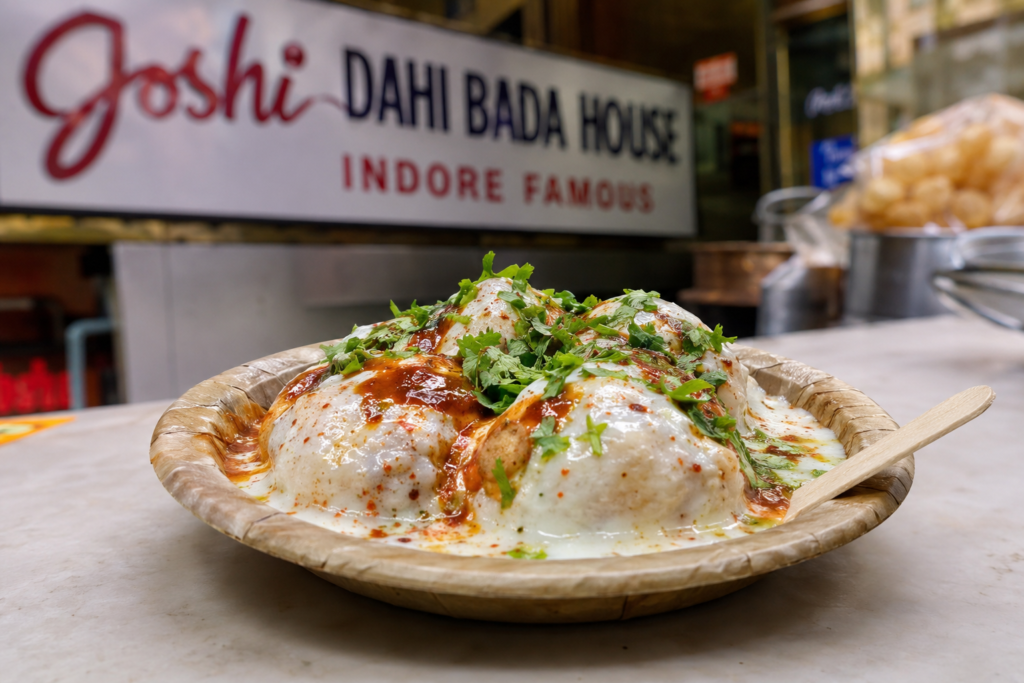
Across India, dahi bada is a snack. In Indore, it is an art form.
Dahi Bada, or Dahi Bade as it is called by the locals, is a delicious yoghurt-based snack item that you can find commonly as part of Indore’s extensive street food.
The lentil fritters are soaked until perfectly soft, then topped with thick curd and a signature blend of spices.
From a health perspective, this dish deserves serious respect. The yoghurt base is rich in probiotics — live bacteria that support gut health, strengthen immunity, and improve nutrient absorption.
The lentil vadas provide plant-based protein. The tamarind and green chutney add antioxidants.
The iconic Joshi Dahi Bada House in Sarafa Bazaar is famous not just for the taste but for the theatrical preparation — the badas are sometimes tossed in the air, much like a pizza base, and the masala sprinkled on them is out of this world.
Health Edge: Probiotic-rich curd supports gut microbiome. Lentils provide plant protein and iron. Tamarind is a natural digestive. The dish is cooling and hydrating, making it ideal for Indore’s hot summers.
Smart Tip: Skip the extra sugar-heavy sweet chutney if you’re watching blood sugar. The green chutney version is both tastier and healthier.
4. Sprouted Moong / Usal — The Protein Powerhouse Hidden in Plain Sight
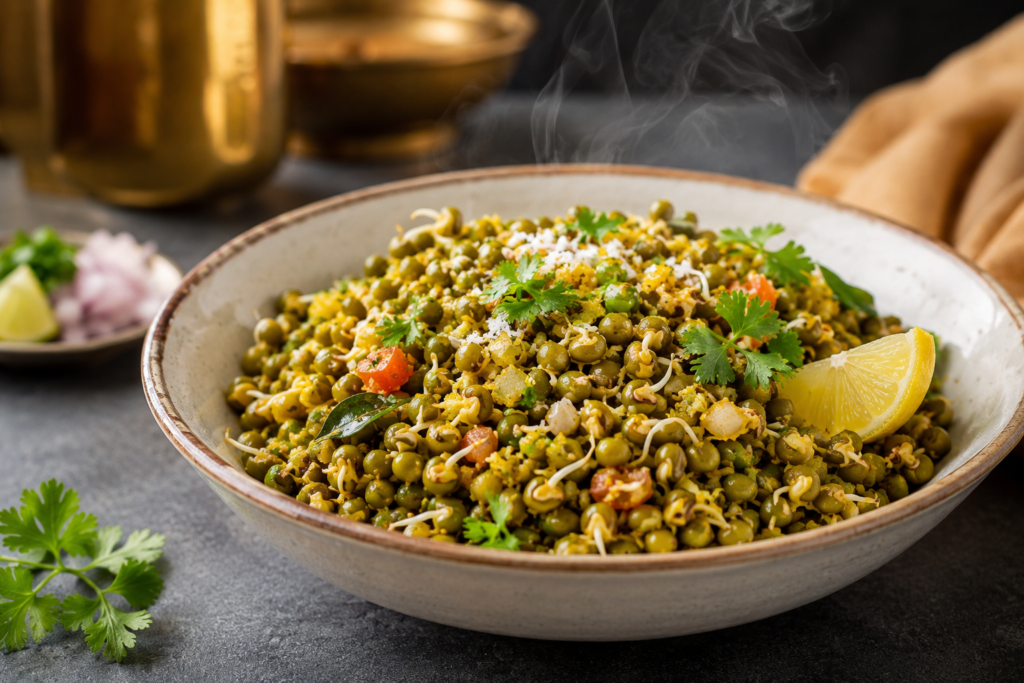
You’ll often find a bowl of sprouted lentil curry — locally called usal — served alongside poha at morning stalls. Most people eat it as an afterthought. It should be the main event.
Sprouts are one of the most nutrient-dense foods you can consume. When a lentil or grain is germinated, its nutritional profile dramatically improves — protein bioavailability increases, anti-nutrients like phytic acid reduce, and vitamin content spikes.
Moong sprouts in particular are dense in folate, vitamin K, magnesium, and plant-based protein.
Usal is a sprouted lentil curry and is commonly served as an accompaniment to Indori poha, making it one of the most nutritionally complete street food combinations in India.
Health Edge: 100g of sprouted moong provides approximately 3.04g of protein, significant folate for cellular health, and vitamin K for bone strength. The germination process also makes the nutrients far easier for your body to absorb.
Indore Connection: Sprouted moong is available at most naashta stalls, and is also a popular home breakfast. Look for places serving usal poha — it’s the complete version.
5. Bhutte Ki Kees — The Winter Snack That's Actually Good for You
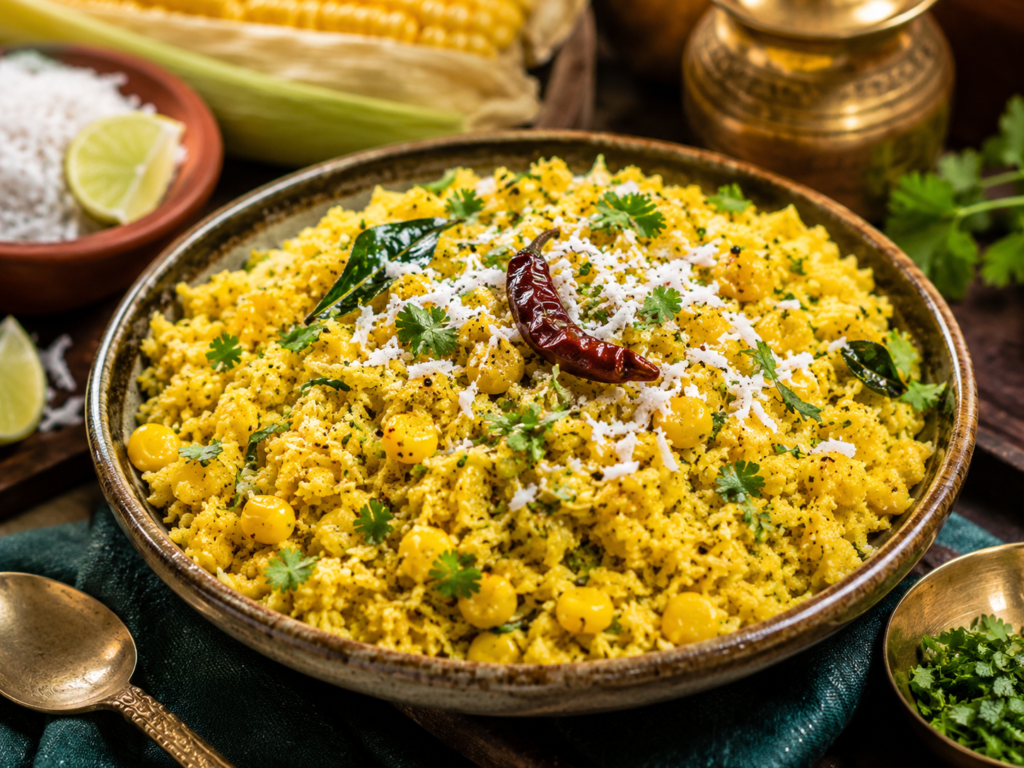
Indore has dozens of dishes you won’t find anywhere else. Bhutte Ki Kees is the one that surprises people most — both in taste and in nutritional profile.
Bhutte Ka Kees is an Indore-origin street food: grated sweet corn stir-fried with milk and simple everyday Indian spices. In Hindi, ‘Bhutta’ means corn and ‘Kees’ means grated.
The result is a creamy, mildly spiced, intensely satisfying snack that feels indulgent but is genuinely wholesome.
Sweet corn is rich in fiber, B vitamins, and antioxidants including lutein and zeaxanthin — both critical for eye health.
Fresh sweet corn is lower in calories than other cereal grains like wheat and rice, which still makes it the healthier choice, and it is a gluten-free cereal suitable for those on gluten-free diets.
The addition of milk adds calcium and protein. The light use of oil and spices keeps it from being heavy.
Health Edge: High in dietary fiber (supports digestion), rich in B vitamins for energy, antioxidants for eye health, and genuinely filling without being calorie-dense.
Where in Indore: Best during monsoon and winter. Available widely at Sarafa Bazaar and Chappan Dukaan stalls. Best consumed fresh — the warmth matters.
6. Moong Dal Chilla — The High-Protein Breakfast You're Ignoring
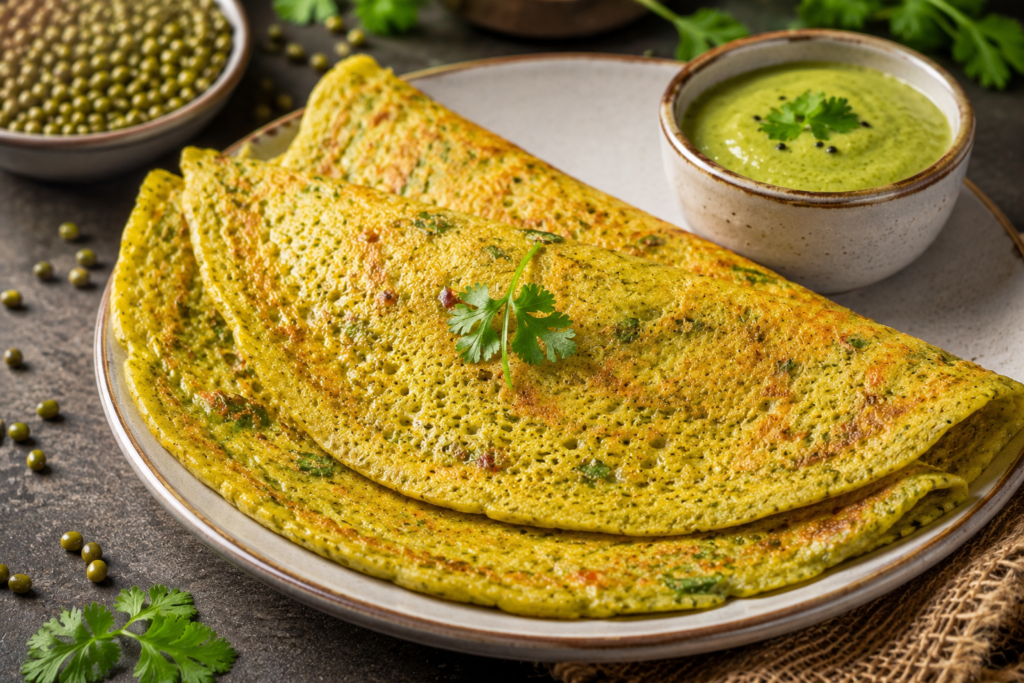
Not every healthy food in Indore is a landmark dish. Some are quietly nutritious staples that sit in the shadow of more glamorous items.
Moong dal chilla is a thin, savoury pancake made from soaked and ground green moong lentils. It’s cooked with minimal oil, stuffed with fresh vegetables, and served with mint chutney.
Per 100g, moong dal delivers around 24g of protein — making it one of the highest plant-protein foods in the Indian kitchen.
It’s widely available at tiffin centers, breakfast counters, and home kitchens across Indore.
Health-conscious gymmers and athletes in the city have increasingly started making this a post-workout meal.
Pair it with a dollop of curd and you have a nutritionally complete breakfast that rivals expensive protein supplements.
Health Edge: High plant protein, low glycemic index (good for blood sugar control), rich in folate and potassium. Far more nutritious than most packaged breakfast cereals.
Indore Availability: Ask at any naashta counter or request it at tiffin services. Most home cooks in Indore make it regularly.
7. Fresh Sugarcane Juice (Ganna Ras) — Indore's Original Energy Drink
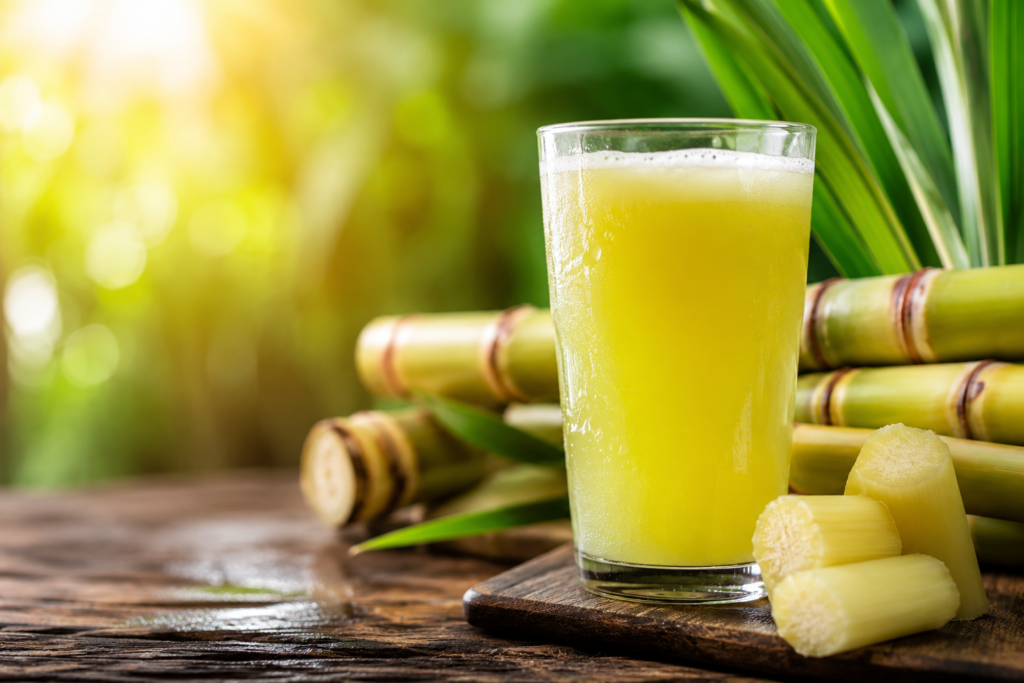
On any warm afternoon in Indore, the line at a good ganna ras stall tells you everything you need to know about this drink’s popularity. What most people don’t realise is just how nutritionally potent it is.
Fresh sugarcane juice is rich in natural sucrose (providing instant energy), iron, calcium, magnesium, and potassium.
It’s also a natural source of antioxidants and has been shown in research to support liver health and kidney function.
A cold glass of fresh ganna ras has anti-inflammatory properties and is traditionally recommended for jaundice recovery in Ayurvedic practice.
The key word here is fresh. Sugarcane juice consumed within minutes of pressing is a different product from the canned, preserved versions.
Indore’s street vendors press it fresh on demand — this is the version that retains its full nutritional potency.
Health Edge: Natural electrolytes make it an excellent post-exercise hydration drink. Rich in iron (helpful for anaemia). A healthier alternative to packaged soft drinks that is also cheaper, more local, and more nourishing.
Smart Caution: Diabetics and those managing blood sugar should consume in moderation — the natural sugar content, while better than refined sugar, is still significant.
8. Rajgira (Amaranth) Chikki / Ladoo — A Forgotten Superfood Making a Comeback
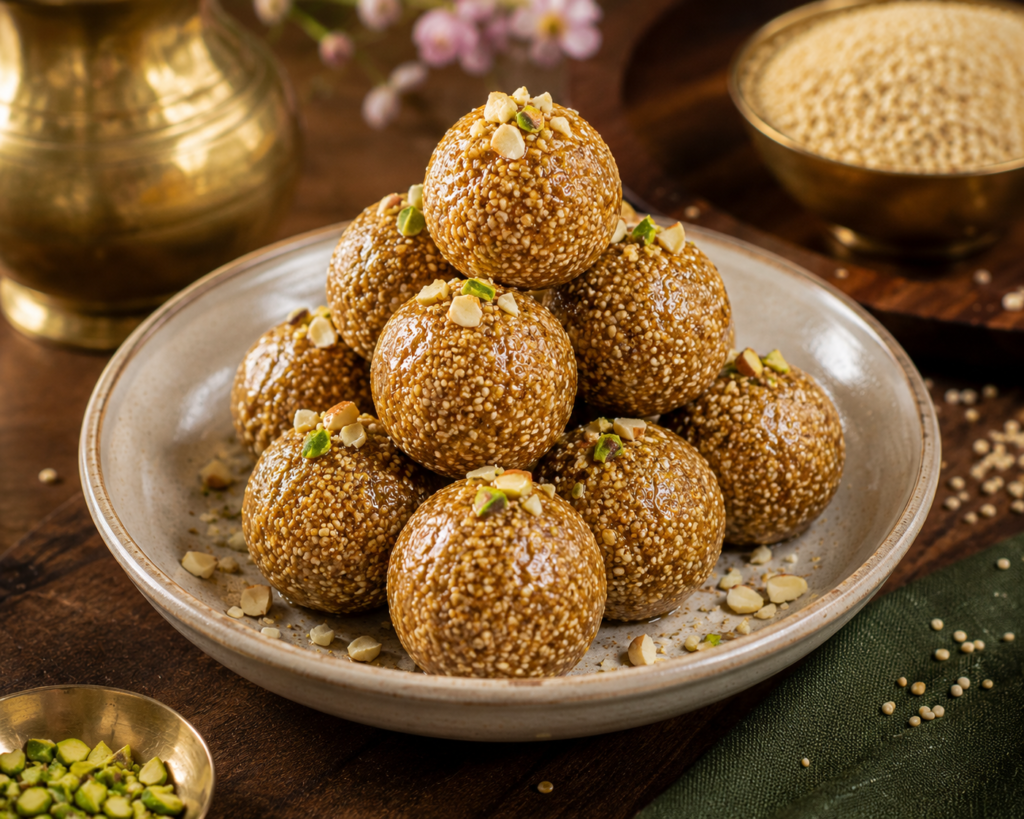
Walk through Indore’s older sweet shops and you’ll spot rajgira chikki sitting quietly next to more glamorous sweets.
Most people walk past it. Fitness-conscious Indoreans are waking up to just how wrong that is.
Amaranth (rajgira) is technically a pseudo-grain — seeds, not grains — and its nutritional profile is extraordinary.
It contains all nine essential amino acids, making it a complete protein — one of very few plant foods to achieve this. It’s rich in iron, calcium, magnesium, and lysine (an amino acid typically absent in most grains).
The chikki form (bound with jaggery rather than refined sugar) makes it a whole-food energy snack that provides sustained energy without a blood sugar crash.
The jaggery itself adds iron and trace minerals.
Health Edge: Complete plant protein, high calcium (supports bone health), iron (combats anaemia), and magnesium.
The jaggery version has a significantly lower glycemic impact than refined sugar sweets.
Indore Availability: Available at traditional sweet shops across the city.
Look specifically for jaggery-bound versions, not the refined sugar ones.
9. Millet-Based Khichdi / Tiffin — The Ancient Grain Revival
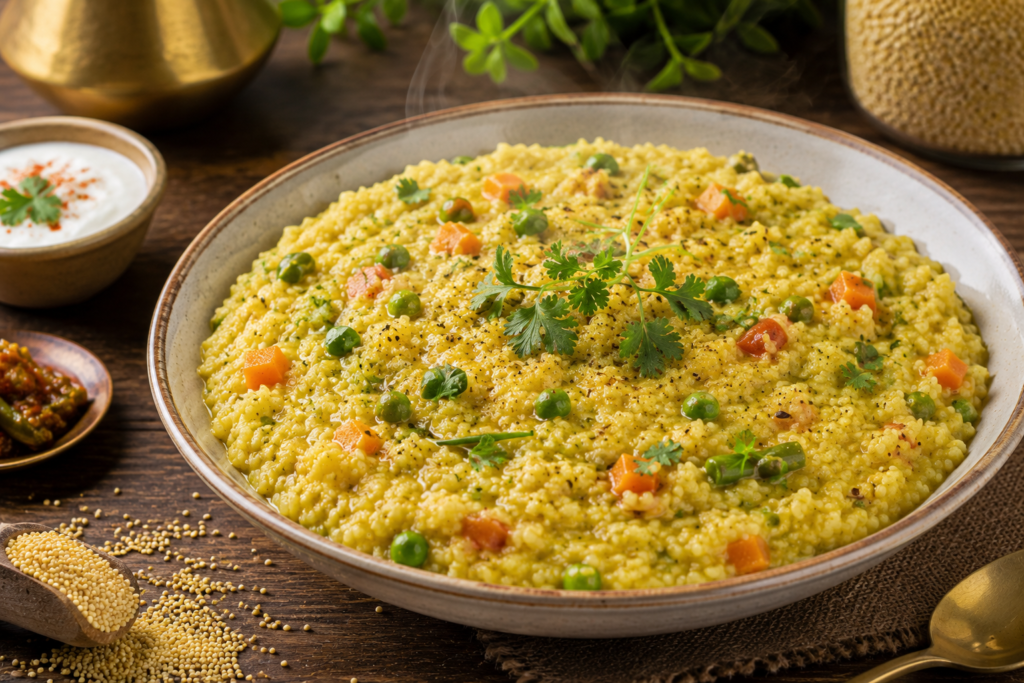
The push for healthy eating has led to the rediscovery of millets, such as ragi, jowar, and bajra. Once staples in Indian households, these grains are now featured in gourmet menus and packaged as modern superfoods.
Indore’s tiffin culture — the city is famous for its home-delivery tiffin ecosystem — is increasingly incorporating millet-based dishes.
Several health-focused tiffin services and home kitchens across Vijay Nagar, New Palasia, and Scheme 54 now offer bajra khichdi, jowar roti, and ragi laddoos as part of weekly menus.
Bajra (pearl millet) khichdi is a particular standout. It’s high in fiber, has a low glycemic index, and is rich in iron, zinc, and B-complex vitamins.
It keeps you full for hours and is gentle on the digestive system — making it ideal for weight management and diabetes-friendly diets.
Health Edge: Millets have 3-5x more fiber than rice, a lower glycemic index, and significantly more iron and zinc. They are also naturally gluten-free.
Where to Find: Several modern tiffin services in Indore now offer millet options. Ask your local tiffin provider — demand is growing and most can accommodate. Organic millet brands are also available at health stores in Vijay Nagar and Sapna Sangeeta areas.
10. Fresh Coconut Water — Hydration That Heals
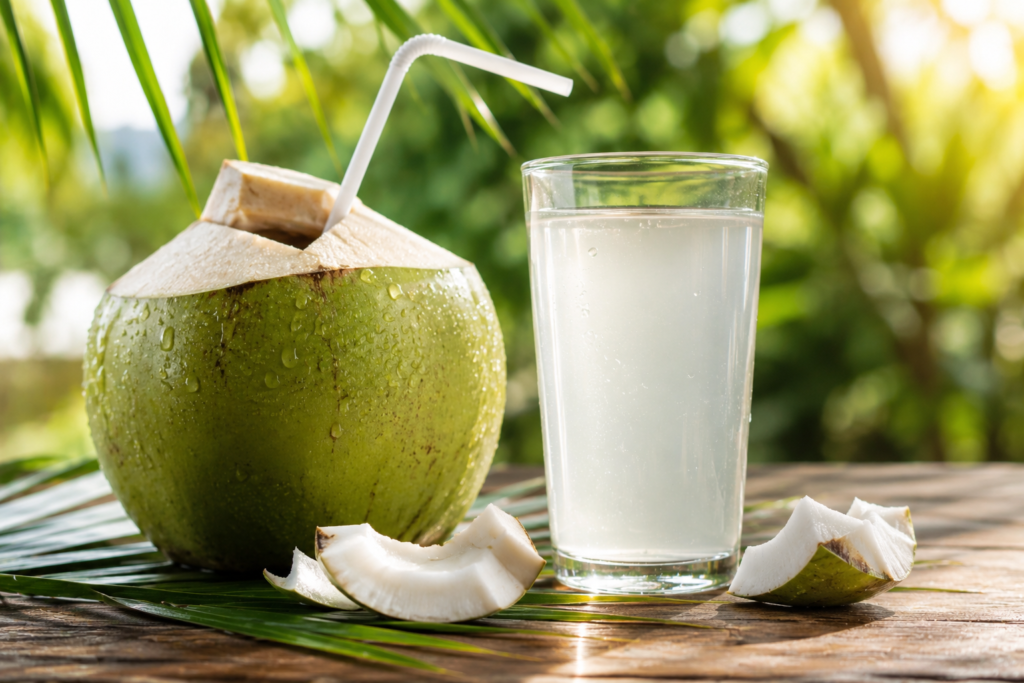
This might seem obvious, but fresh coconut water — available from vendors across Indore year-round — is nutritionally superior to almost every beverage option available in the city, including most packaged “health drinks.”
A single glass of fresh tender coconut water provides potassium (more than a banana), natural electrolytes, cytokinins (plant compounds with anti-aging and anti-cancer properties), and a small amount of easily digestible carbohydrates.
It’s naturally low in calories, completely free of preservatives, and has been shown to reduce blood pressure and support kidney health.
Indore’s coconut water vendors are everywhere — from RNT Marg to Vijay Nagar. The cost is minimal. The nutritional benefit is enormous.
Health Edge: Natural electrolyte replenishment (perfect after Indore’s summer heat), supports kidney function, contains cytokinins with anti-inflammatory effects, and zero artificial additives.
Upgrade Tip: Drink it right from the coconut, fresh, on an empty stomach first thing in the morning for maximum absorption.
Putting It All Together: Eating Healthy in Indore, One Meal at a Time
Indore doesn’t need to look outside for healthy food inspiration.
It’s already here — in the morning poha stalls, in the winter bhutte ki kees vendors, in the sprouted usal alongside your breakfast, and in the growing community of nutrition-aware residents making smarter choices every day.
84% of Indian consumers now actively seek safer and healthier food choices, with 29% citing health benefits as one of the top three reasons for switching brands.
That shift is visible in Indore too — in the new salad cafes opening in Vijay Nagar, in the gym culture of Scheme 54, and in the rising demand for local, clean, fresh food.
The foods on this list aren’t trends. They’re either time-tested Indori traditions that happen to be excellent for your body, or science-backed additions that fit seamlessly into how this city already eats.
You don’t need to move to a health food capital.
You just need to eat Indore more intentionally.
FAQs
Q1. What is the healthiest food available in Indore?
Several Indori classics are genuinely nutritious. Indori Poha is a light, iron-rich, gluten-free breakfast. Sprouted moong usal is high in plant protein and vitamins. Bhutte Ki Kees is fiber-rich and antioxidant-dense. For the highest nutrient density per gram, fresh microgreens — now available locally through HavitGreens — are in a category of their own.
Q2. Is Indori Poha actually healthy?
Yes. Indori Poha is made from flattened rice, which is easy to digest, rich in iron and B-vitamins, and low in fat. A serving provides approximately 250–300 calories. When made with vegetables like peas, carrots, and curry leaves, it becomes a balanced, nutritious breakfast. Adding sprouts or microgreens boosts the protein and vitamin content further.
Q3. What healthy food can I eat for breakfast in Indore?
The best healthy breakfast options in Indore include Indori Poha with sprouted usal, Moong Dal Chilla with mint chutney, and fresh coconut water or sugarcane juice. For an additional nutritional boost, add 20g of microgreens to any of these — available freshly grown from HavitGreens in Indore.
Q4. Where can I find healthy restaurants in Indore?
Indore has a growing health food scene. Look for tiffin services offering millet-based meals in areas like Vijay Nagar and New Palasia. Several cafes in Scheme 54 and Vijay Nagar areas now offer salad bowls, grain bowls, and protein-forward menus. For fresh, locally grown microgreens and nutrition-first food, visit havitgreens.com.
Q5. Is dahi bada (dahi vada) healthy?
Yes, in moderation. The yoghurt (curd) base in dahi bada is rich in probiotics that support gut health and immunity. The lentil fritters provide plant protein. The spices — tamarind, cumin, coriander — all have digestive and anti-inflammatory benefits. Choose versions with less sweet chutney to reduce sugar intake.
Q6. Are there healthy street food options in Indore?
Absolutely. Indori street food has several genuinely healthy options: Poha (iron, B-vitamins), sprouted usal (plant protein), bhutte ki kees (fiber, antioxidants), and fresh sugarcane juice (natural electrolytes). The key is choosing minimally processed versions without excessive oil or sweeteners.
Q7. What are microgreens and where can I buy them in Indore?
Microgreens are young vegetable seedlings harvested 7–14 days after germination. They contain 4 to 40 times more nutrients per gram than mature vegetables. HavitGreens grows and delivers fresh microgreens in Indore — including broccoli, radish, fenugreek, and sunflower varieties. Order at havitgreens.com.
Q8. How can I make my daily Indore diet healthier without giving up local food
You don’t need to give up anything. Simply add to what you already eat. Add sprouted moong to your poha. Drink coconut water instead of packaged juice. Switch one jaggery-based snack for your usual processed sweet. Add 20g of microgreens to your dal or salad. Small, consistent additions to Indore’s already-wholesome food traditions create real nutritional impact over time.